
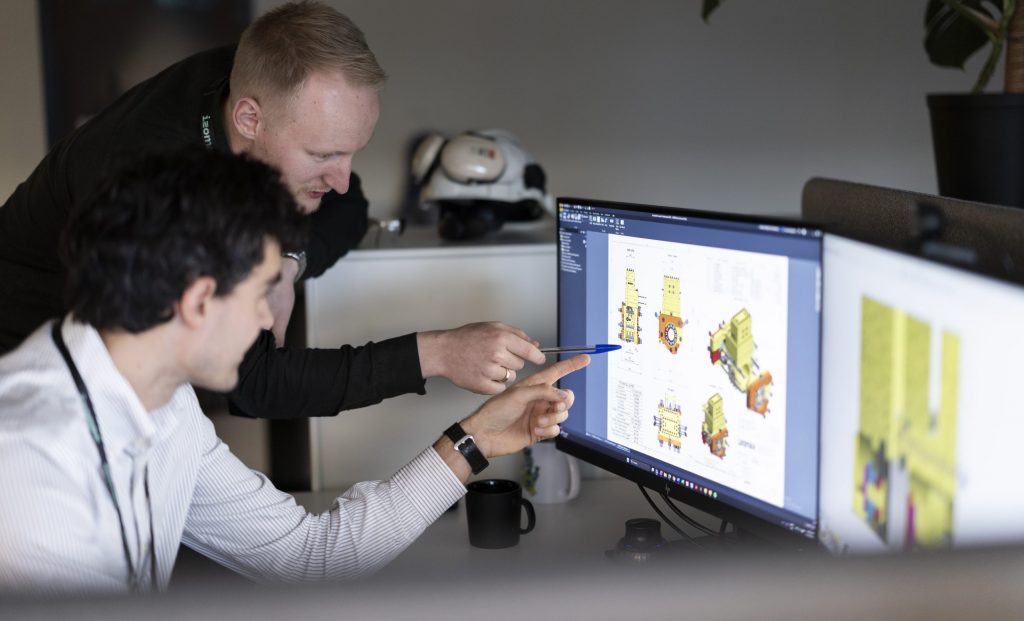
What Assumptions Are You Willing to Defend?
Every design that leaves an engineer's desk carries a signature. Behind that signature sits a set of assumptions — some documented in the calculation package, many not. They are inherited from software defaults, from industry convention, or from the simple fact that “this is how it has always been done here.”
Sign-off is often treated as confirmation that a calculation was performed and passed. But a signature is not only a statement that the mathematics is correct. It is a statement that the underlying assumptions are appropriate for the application, and that the engineer signing is prepared to stand behind them if conditions turn out differently than expected.
This distinction matters because assumptions do not carry equal weight. An overly conservative material property costs little if it works in your favor. An assumption about installation tolerance, assembly sequence, or actual operating pressure can be the difference between a design that performs as intended and one that does not.
The difficulty is that the assumptions that matter most are often the ones nobody wrote down. A load case selected because it was the default input in a template. A boundary condition carried over from a similar project without being re-examined. A tolerance stack-up assumed to be fine because it has always been fine before. None of this reflects poor engineering. It is simply what happens when good engineers work under time pressure, using tools that make certain assumptions invisible by default.
Real accountability starts with naming these assumptions rather than accepting them silently. Before signing off, an engineer should be able to answer a simple question: if this particular assumption turns out to be wrong, what happens — and can I defend having made it?
This is a different question than whether a calculation is correct. Two engineers using identical inputs will reach identical results. What separates them is whether each can explain why those inputs were chosen, and whether either has considered what happens when reality diverges from the model. That is judgement, not mathematics, and it is not something a review checklist can substitute for.
Accountability is not measured by whether a calculation was reviewed and approved. It is measured by whether the engineer who signed it can defend the assumptions inside it, in the moment the design meets conditions nobody fully anticipated.
In the field, this gap surfaces in familiar ways. A component that passed every calculated check still proves difficult to install because an assumed clearance did not survive contact with a real structure. A sealing interface performs exactly as modelled on the bench, then behaves differently once exposed to the misalignment and repeated handling of an actual job. These are not failures of the calculation. They are what happens when an assumption that felt safe on paper was never tested against how the system is actually built, assembled, and used.
None of this is an argument against assumptions — every design requires them, and no analysis is possible without simplifying reality into something we can calculate. The argument is for treating assumptions as decisions in their own right, deserving the same scrutiny we give the numbers that follow from them.
This is the standard we try to hold ourselves to at Izomax. A calculation passing review is the starting point, not the finish line. Before a design goes out under an engineer's name, we expect that engineer to be able to say, plainly, which assumptions the result depends on, and why those assumptions hold for the system as it will actually be built and operated. It is this willingness to own the assumptions behind the numbers — not just the numbers themselves — that we believe defines real accountability in engineering practice.

 LinkedIn

Contact us
Our friendly team would love to hear from you.