
Reconsidering Isolation: From Double Block & Bleed to AOGV
Safe isolation is a fundamental requirement in any intrusive maintenance activity on pressurized systems. Before containment is broken, the system must be brought into a state where energy is controlled, risks are minimized, and the integrity of the isolation can be verified. This principle is consistently reflected across recognized industry frameworks such as Occupational Safety and Health Administration (OSHA 29 CFR 1910.146), Health and Safety Executive (HSE HSG253), and International Organization for Standardization (ISO 45001). While the terminology and application may vary, the underlying requirement remains the same: isolation must be demonstrable, controlled, and maintained throughout the operation.
One of the most widely applied methods for achieving this is Double Block & Bleed (DBB). The principle is well established: two independent barriers are arranged in series, with a bleed point between them. This configuration provides redundancy and enables operators to vent and monitor the space between barriers, offering an indication of leakage past the upstream isolation. In practice, DBB supports several key safety functions — redundancy, pressure relief, leak detection, and verification prior to intervention.
However, DBB should be understood as a method, not an objective in itself. The true objective is verifiable isolation. The bleed point provides an indirect means of confirming barrier integrity, but it does not eliminate uncertainty entirely. It relies on interpretation, system behavior, and the assumption that conditions remain stable during the operation.
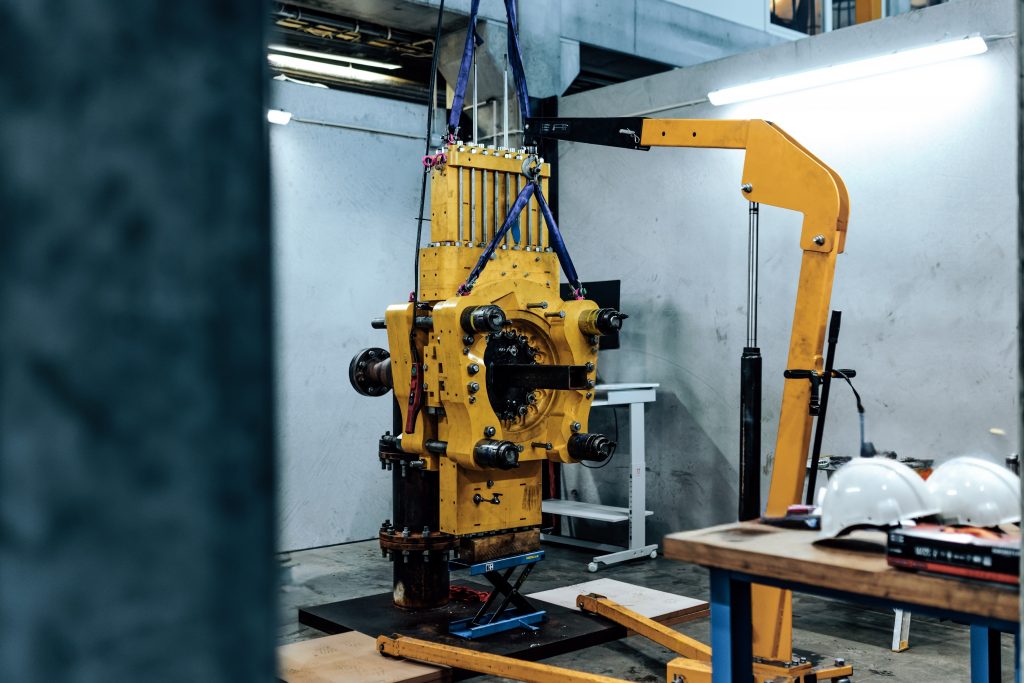
The AOGV addresses the same isolation objectives through a different, but functionally aligned, philosophy. Rather than relying on upstream process valves as isolation barriers, the AOGV establishes a controlled pressure envelope around the intervention point. Within this envelope, system conditions are continuously monitored, allowing isolation performance to be directly assessed and verified throughout the operation.
It is important to clarify that the AOGV is not a Double Block & Bleed arrangement, nor is it intended to be interpreted as such, either directly or indirectly. The pressure envelope and associated equipment are not defined as “blocks” in the DBB sense, but instead form part of a controlled and monitored system used to establish safe conditions for intervention. This distinction is critical. Where DBB verification is based on observing pressure conditions at a bleed point as an indirect indication of barrier performance, the AOGV enables direct monitoring and testing of isolation conditions within the system. The result is a controlled and measurable verification process, where isolation integrity is actively assessed rather than inferred.
...DBB should be understood as a method, not an objective in itself. The true objective is verifiable isolation
A key element of the AOGV process is that it culminates in the installation of a mechanical barrier — typically in the form of a blind or spade. This represents positive isolation, consistent with recognized definitions of “blanking or blinding” as described in OSHA 29 CFR 1910.146. Unlike valve-based isolation, this barrier provides complete physical separation of the system and does not depend on sealing performance or system stability.
In established isolation practices, positive isolation represents the most robust form of isolation, as it eliminates reliance on valve integrity. Methods such as Double Block & Bleed are commonly applied to safely establish and verify conditions prior to installing such a barrier. In this context, the AOGV should be understood as a method that enables a controlled transition from a monitored and verifiable isolation state to confirmed positive isolation.
From a functional standpoint, the AOGV approach aligns with the key safety principles underlying DBB and broader isolation practices. It avoids reliance on a single barrier, enables continuous verification through monitoring and testing, ensures controlled management of pressure and stored energy, and ultimately establishes a positive mechanical isolation. These elements are consistent with the principles outlined in ISO 45001, where risk reduction is achieved through elimination of hazards and implementation of reliable control measures.
The key difference lies not in the objective, but in how it is achieved. DBB represents a passive and indirect verification method based on valve redundancy. The AOGV represents an active and controlled approach, where isolation conditions are established, monitored, and verified within a defined system, prior to achieving a final state of positive isolation.
As with any engineering solution, the suitability of the method depends on the application. Factors such as pressure, temperature, fluid characteristics, and operational constraints must be considered as part of a structured technical assessment. Isolation is not a one-size-fits-all concept, and the method chosen must reflect both the system and the risks involved.
In this context, the AOGV should not be seen as a departure from established practice, but as an alternative approach that fulfills the same fundamental safety objectives. By combining controlled and continuously monitored isolation with the installation of a positive mechanical barrier, it provides a robust and technically sound method for achieving safe conditions for intrusive maintenance.
Ultimately, safe isolation is not defined by the specific method applied, but by the ability to demonstrate that the system is controlled, secure, and ready for intervention. The AOGV achieves this by ensuring continuous verification of isolation conditions and by establishing positive isolation as the final and confirmed state of the system.


 LinkedIn

Contact us
Our friendly team would love to hear from you.