


Case Study
Izomax AOGV Technology Helps Supermajor Reduce Offshore Gas Production Outage by Minimum Two Days Without Stopping Oil Production in Azerbaijan
Challenges
A Supermajor operator in Azerbaijan planned a scheduled offshore maintenance shutdown, with a tightly integrated work program that included critical flare tip replacement activities. With similar maintenance programs typically requiring 19 days, the operator was looking to implement technologies capable of reducing the duration of the associated gas production outage. The flare line to be isolated was connected to the neighbouring oil production platform without isolation valves. The operator therefore also needed an isolation method that would allow oil production to continue while the gas facilities were offline.
Previous experience with Izomax AOGV technology on other operated assets led the operator to evaluate the AOGV mechanical isolation system. The objective was to establish positive mechanical isolation to enable essential replacement of a damaged flare tip, together with isolation of the low pressure flare at the knock-out drum outlet.
This was Izomax’s first project in Azerbaijan, placing particular emphasis on operational readiness and close collaboration with the operator.
The scope presented several technical challenges. The isolation strategy required 30 inch and 12 inch AOGV tools to operate in parallel on the interconnected high pressure and low pressure flare systems, respectively. The 30 inch application also involved significant flow and differential pressure at the isolation point, requiring specific consideration of the forces acting on the AOGV isolation spade during insertion and retrieval.
A technical review identified the need for design modifications to the 30 inch AOGV isolation spade to support controlled insertion and retrieval of the spade under the anticipated operating conditions. The proposed modifications were developed and tested over approximately two months as part of a collaborative engineering and operational readiness programme with the operator.
Technical Snapshot
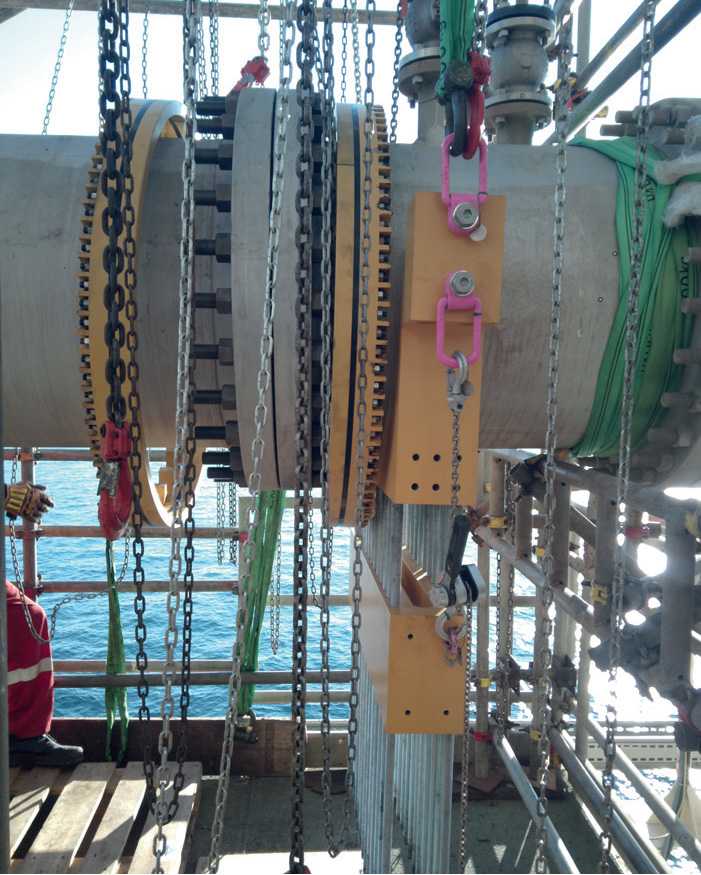
Izomax completed a site survey early in the project to assess accessibility and suitability of the proposed AOGV isolation locations. Several potential isolation locations were reviewed on both the 30 inch high pressure flare line and the 12 inch low pressure flare line. The preferred flange pairs for isolation were identified in collaboration with the operator based on accessibility, available working space, suitability for rigging and lifting, and available pipe flexibility for flange separation.
30 inch High Pressure Flare Line Isolation
The 30 inch application presented the principal technical challenge. At the time of isolation, the anticipated gas flow was approximately 160 MMscfd, resulting in an estimated differential pressure of up to 3.8 bar across the isolation spade. The relatively high flow and resulting differential pressure had the potential to increase friction on the spade and, consequently, the force required for controlled insertion and retrieval.
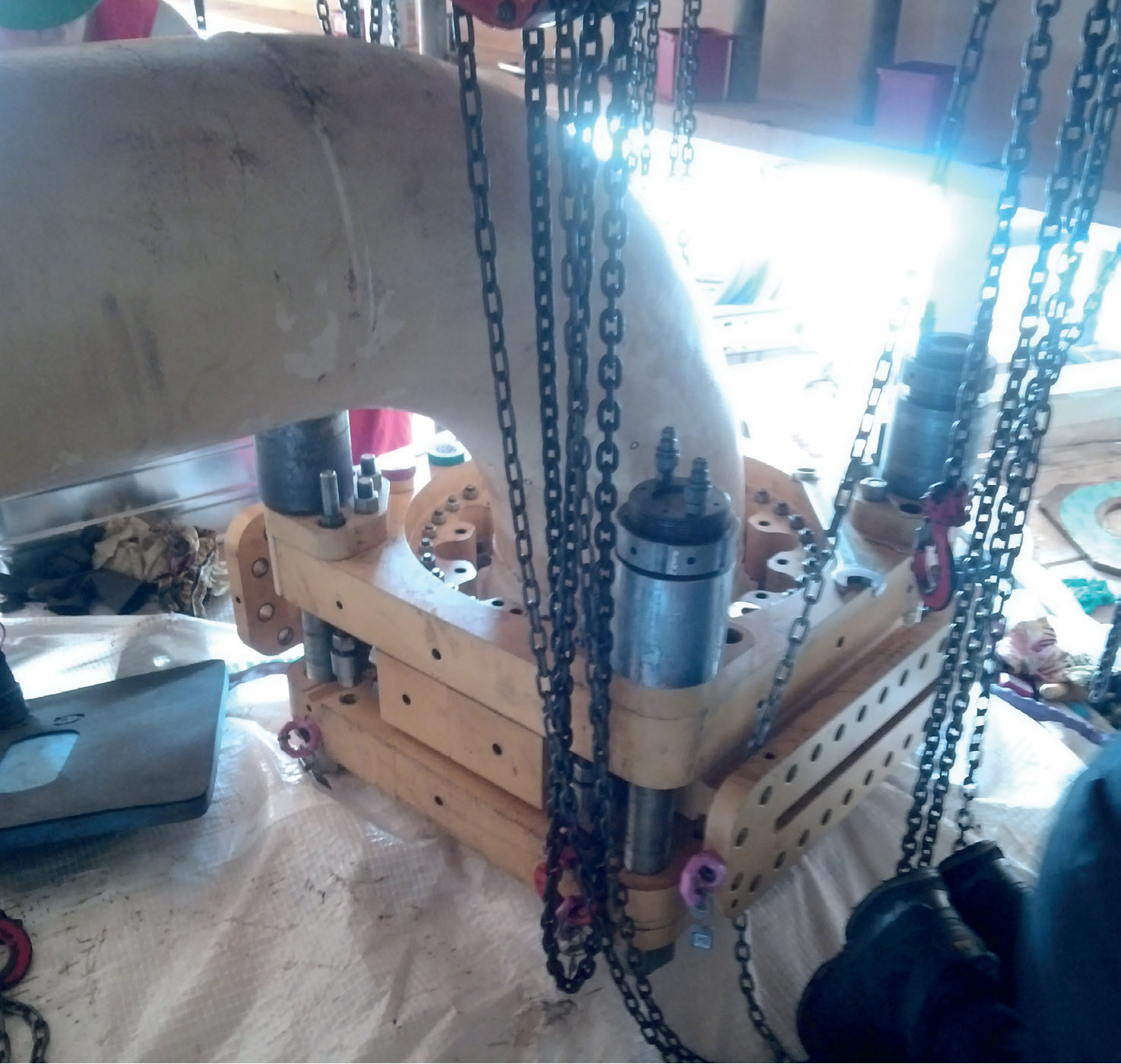
To mitigate this, the Izomax engineering team evaluated modifications to the spade design and sealing arrangement, including the incorporation of low friction guide materials. Copper and PTFE were selected for further evaluation, and a comprehensive workshop test programme was agreed with the operator, including witnessed testing and review of the resulting data.
Based on the test results, PTFE was selected as the preferred solution for the offshore application.
The offshore operation subsequently confirmed the significance of the anticipated flow effects. During installation, considerable force was required to insert the spade against the flowing system. Once the spade was landed, the flare extinguished, and the isolation was verified by both pressure build-up and AOGV cavity pressure testing before handover to the operator.
12 inch Low Pressure Flare Line Isolation
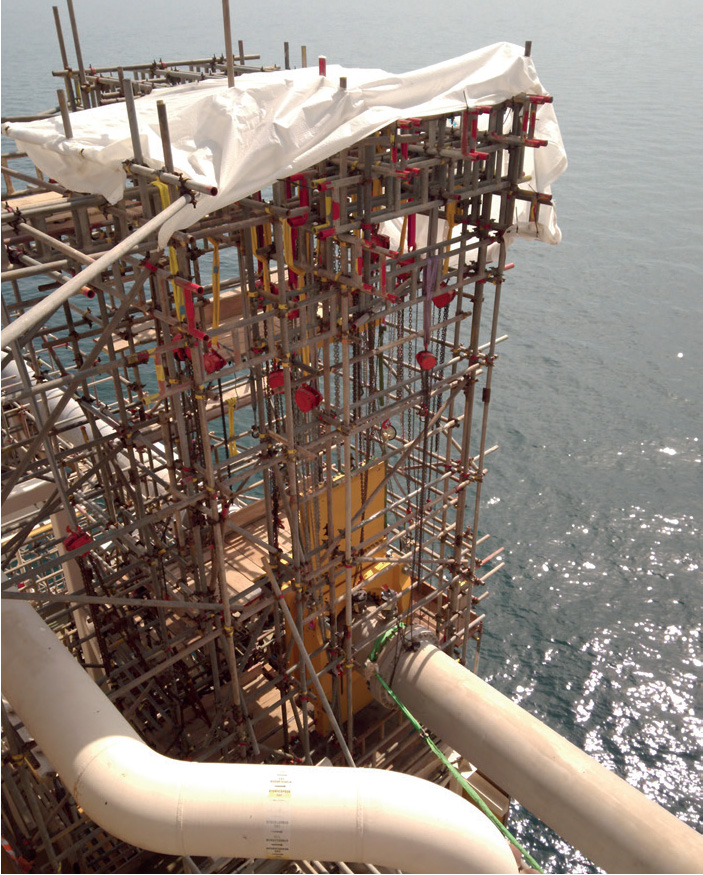
The 12 inch isolation was installed ahead of the 30 inch isolation and was successfully leak tested and accepted by the operator. Following completion of both installations, the low pressure and high pressure flare systems were confirmed isolated, tested and verified, and were formally handed over to the operator to proceed with the planned flare tip replacement activities.
Additional 2 inch Maintenance Scope
During project development, the operator identified corroded pipe sections going to the low pressure flare drum that required replacement, and an opportunity to incorporate this scope within the wider maintenance program using two additional 2 inch AOGV isolation applications. The work was progressed during periods when activity on the critical flare tip scope was limited by operational or weather constraints, allowing available personnel and resources to be used productively without disrupting the primary isolation scope.
By integrating the additional work into the existing mobilization, the operator also benefited from shared personnel, equipment and site resources, reducing the overall cost compared with a separate future intervention.
Operational Readiness and Offshore Execution
The operator was closely involved throughout the preparation and testing phase, with subject matter experts participating in the premobilization test program at the Izomax facility. This supported alignment with the operator’s engineering and operational assurance requirements and provided familiarity with the AOGV installation, isolation and restoration sequence before offshore execution.
The planned isolation strategy was successfully implemented offshore, with field adjustments made where required to respond to actual conditions. The 12 inch isolation was established first, followed by installation of the 30 inch system and diversion of flow to the alternate flare system. Following completion of the flare tip, the isolation sequence was reversed, and flow was re-established to the primary flare.
Use of the AOGV isolation strategy allowed oil production on the neighbouring platform to continue while the flare tip was replaced, with only the gas facilities taken offline. The AOGV isolation strategy was among the technologies that allowed the operator to plan the maintenance program for 11 days, compared with 19 days for similar programs. The operator attributed a minimum two day reduction in the offshore gas production outage to the AOGV isolation strategy. The program was completed ahead of schedule.
The flare tip work took less time than planned, and the AOGV isolation spades were retrieved and the isolation locations reinstated faster than planned. The AOGV isolation strategy also enabled additional maintenance work to be completed within the same work program.
The project demonstrated how early engineering engagement, application-specific testing and close collaboration between the operator and Izomax can support the safe execution of complex offshore maintenance while reducing outage duration and maximising the value of an existing mobilization.
I would like to extend our sincere appreciation for your outstanding support and commitment throughout this TAR. Your professionalism, expertise, flexibility, and determination played a key role in overcoming challenges and delivering critical work safely and successfully. The flare tip replacement scope was one of the most critical activities of the TAR, and your team’s dedication and collaborative approach were instrumental in achieving the isolation with magic AOGV tool.
Thank you for being a valued partner and for the exceptional contribution made by the entire Izomax team and we look forward to working with you again in the future!