
Case Study
World’s largest Offshore Operator Utilizes Izomax AOGV to Tie-in new Gas field to Production Platform avoiding major shut down
A major Operator on the Norwegian Continental Shelf was in the early operational phase of a tie-in of 4 subsea wells to a nearby production platform. Working closely with their MMO contractor and Izomax, the client had originally planned using the AOGV to minimize platform and production shutdown times. As plans stood, even with the use of the AOGV, production would cease for several weeks during the tie-in operation.
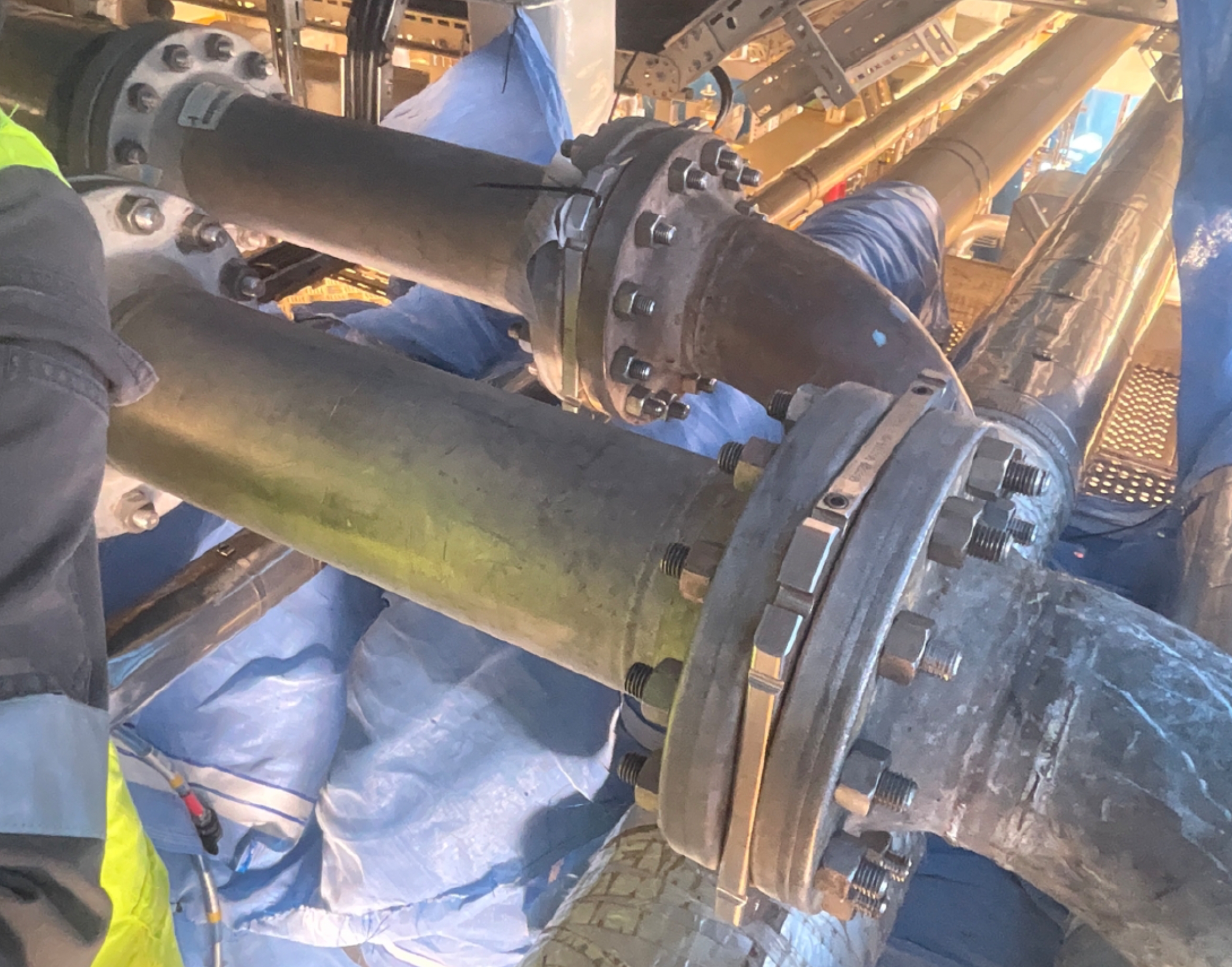
During the planning phase, it became evident that further time could be saved by inserting blinds into selected tie-in points in the system and leaving them in place for an extended (up to two years) period. Using the AOGV to insert semi-permanent blinds in a live system allows a well understood and efficient method to isolate the system. New infrastructure and upgrade installation work is able to begin safely with the blind in place, allowing a fast and proven method to remove the blind and bring the entire new field on stream once work is complete.
The AOGV had not previously been used to insert blinds which were planned to be left in place for an extended period. During pre-job planning, the team investigated how long a blind could be left in place. Engineering and redesign primarily consisted of:
Redesign of blind material and gasket specifications to ensure they met the same specification as the line – Previous material was typically S690 steel with vulcanized rubber as the sealing material (which met temporary placement requirements). However, the line specification was typically duplex steel and spiral wound gaskets. The new design blind and gaskets were tested extensively at Izomax with client witnessing to ensure compliance with requirements and specifications.
The tie-in project led to questions regarding decommissioning – utilizing the same process in reverse. In other words, using an AOGV to insert a spade in a live system to allow the decommissioned pipe or infrastructure (valves, heat exchangers, knock-out drums etc,) to be removed or permanently isolated. The key element being that once a blind or blind flange is inserted using the AOGV, the system has a positive mechanical full isolation.
Whilst the tie-in project originally called for isolations at 14 locations, as the project developed, the MMO contractor responsible for the project realized additional ways that the AOGV could be used to further increase tie-in efficiency leading to a better outcome for the two-year project. To date, Izomax have performed 15 of 25 planned isolations and installed 10 semi-permanent blinds ranging from 2” to 10” and 150 class to 300 class, in preparation for the final tie-in and production start in late 2026.
Although the AOGV blind can be designed with specifications to be classed as permanent, there is no reason that the AOGV cannot be used to insert a blind flange once the isolated infrastructure is removed.
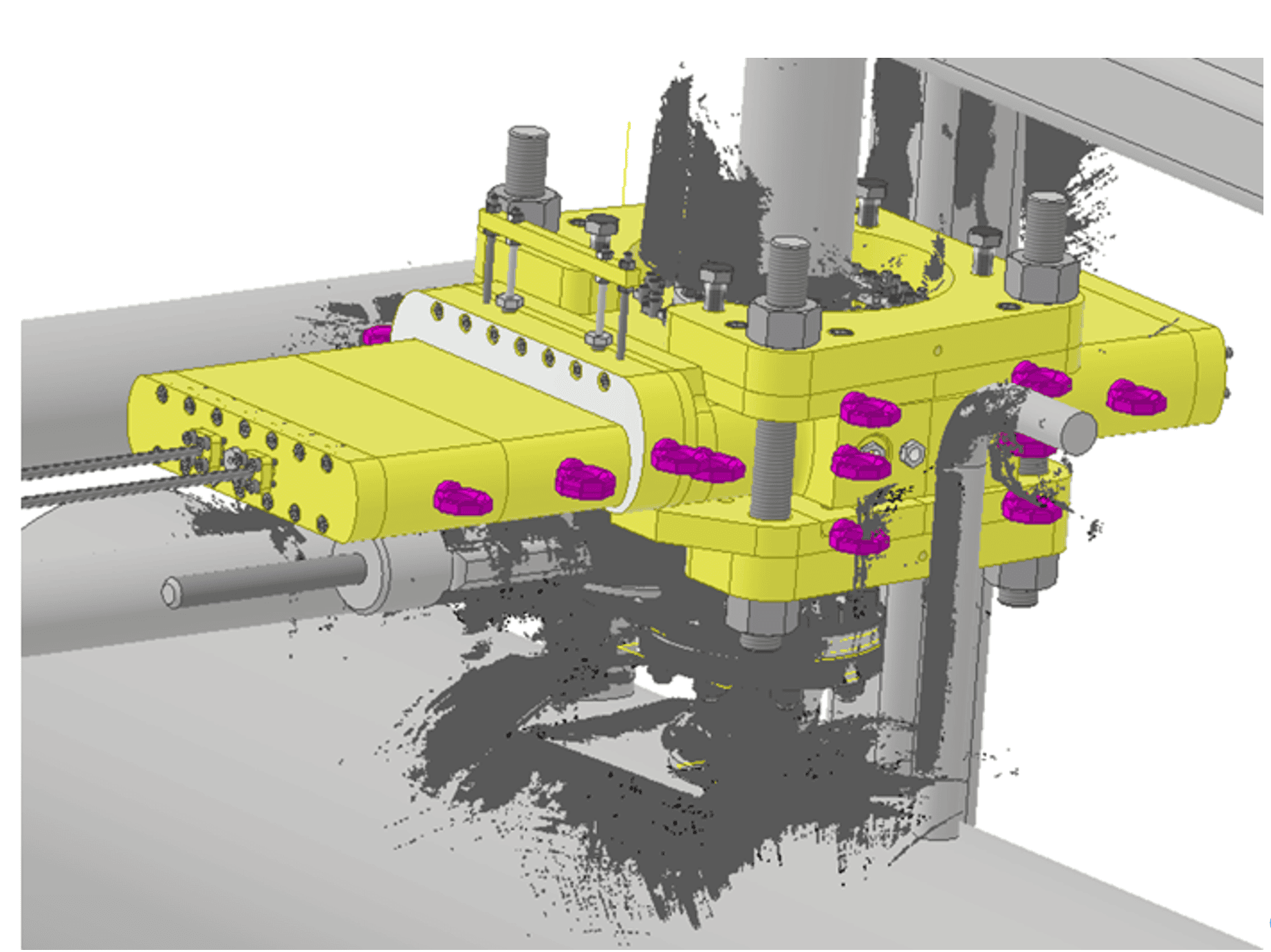
AOGV – Key Operational Steps
The AOGV-IC is pre-tensioned:
- Compresses flanged connection against the old flange gasket
- Takes over tension for the original flange bolts
- Original flange bolts are removed and replaced with flange plugs
- AOGV is leak-tested
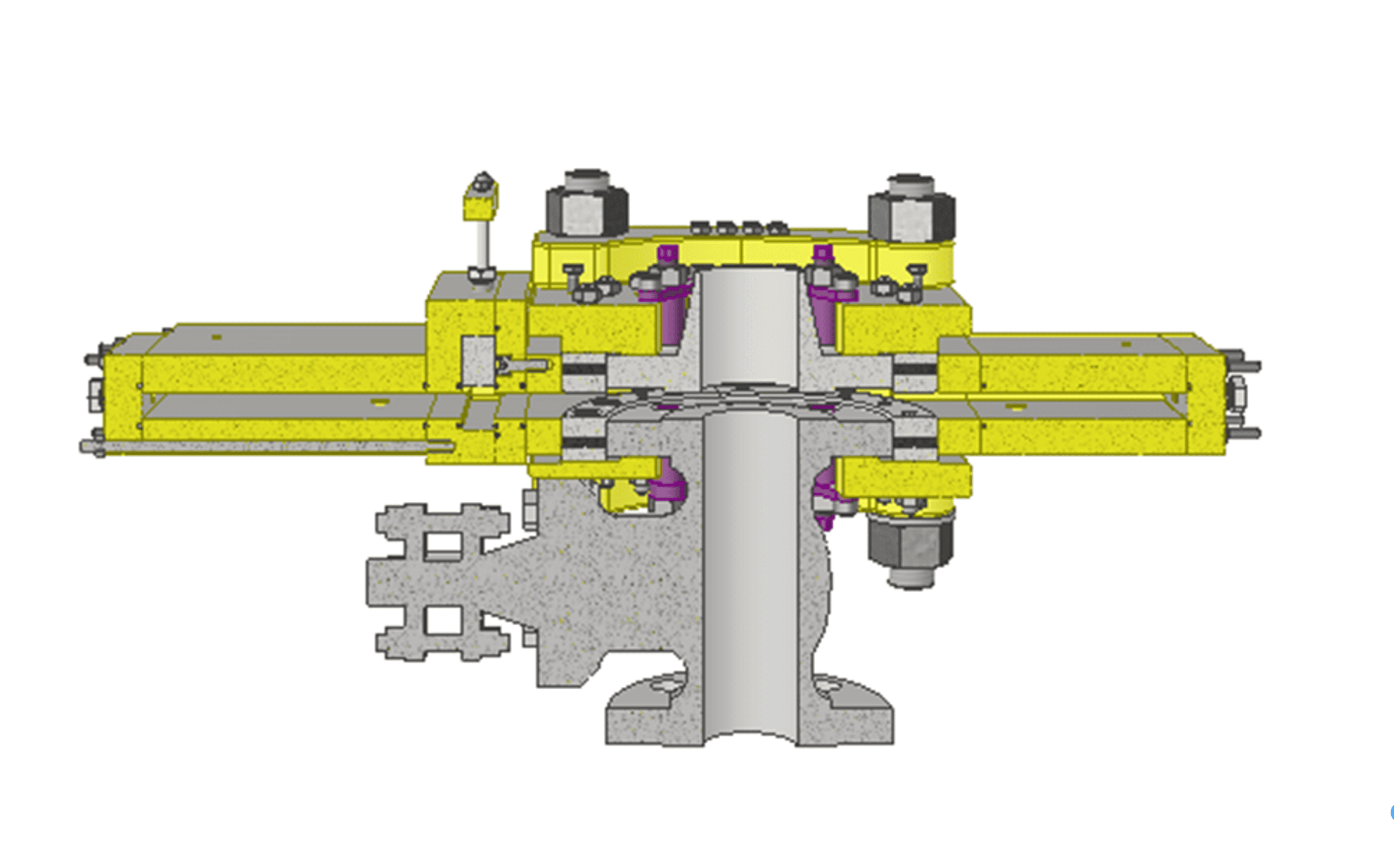
Split
The flanged connection is split apart:
- The Old gasket is removed
- Spade is inserted
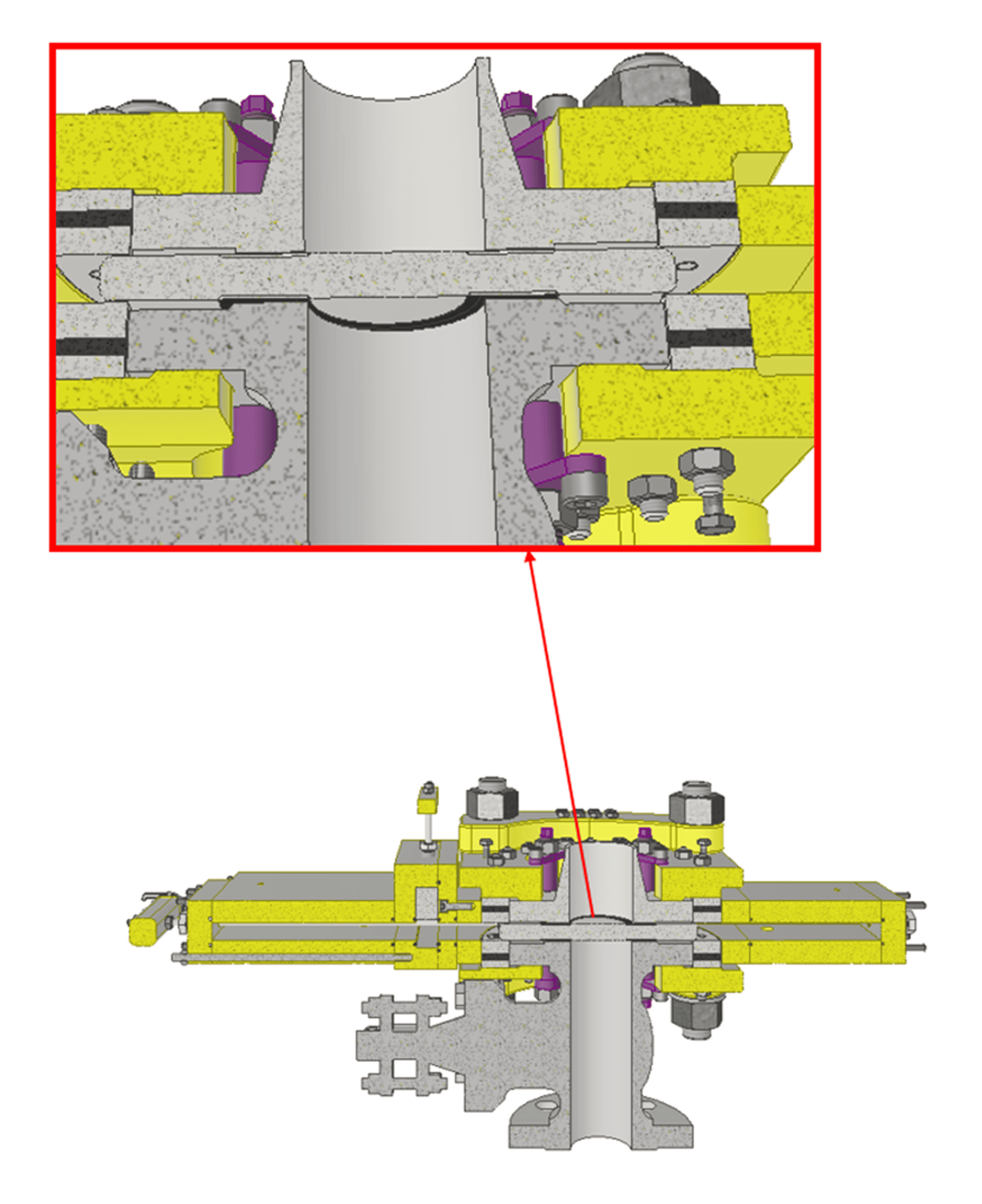
Compression & Isolation
- The flanged connection is compressed against the spade (isolation)
- Isolating the system
- Leak test of spade
- AOGV can be disassembled at this point if required, maintenance or Decom work can now be executed